Whitening, Veneers, or a Crown: Which Fixes Your Smile?
Whitening, veneers and crowns each fix a different problem: color, shape or strength. Here's how to match the fix to what actually bothers you about your smile, what each one asks of your natural teeth, and when a dark tooth needs a health check first.
By Dr. Noah B. Honig, DMD · November 12, 2026 · 6 min read

Start with what's bothering you
Most people come in asking for a treatment by name. A better place to start is the thing you notice when you look in the mirror, because whitening, veneers and crowns each solve a different problem.
Whitening changes color. Veneers change how the front of a tooth looks: its color, shape, chips and gaps. A crown changes the whole tooth, and it's often more about strength than looks. If you can name which of those three is bothering you, you're already most of the way to the right answer.
There's also a difference in what each one costs your natural teeth. Whitening leaves the tooth's structure alone. Veneers and crowns both need some enamel removed, and that part can't be undone. That's why we usually start with the most conservative option that will honestly do the job.
Why some stains won't bleach
Stains come in two kinds. Extrinsic stains sit on the outer surface of the enamel. Intrinsic stains form inside the tooth, within the enamel or the dentin, the yellowish layer underneath. According to Cleveland Clinic, professional whitening works best on surface stains, and the ADA notes that removing stains from the dentin is considered near impossible with an external whitening procedure.
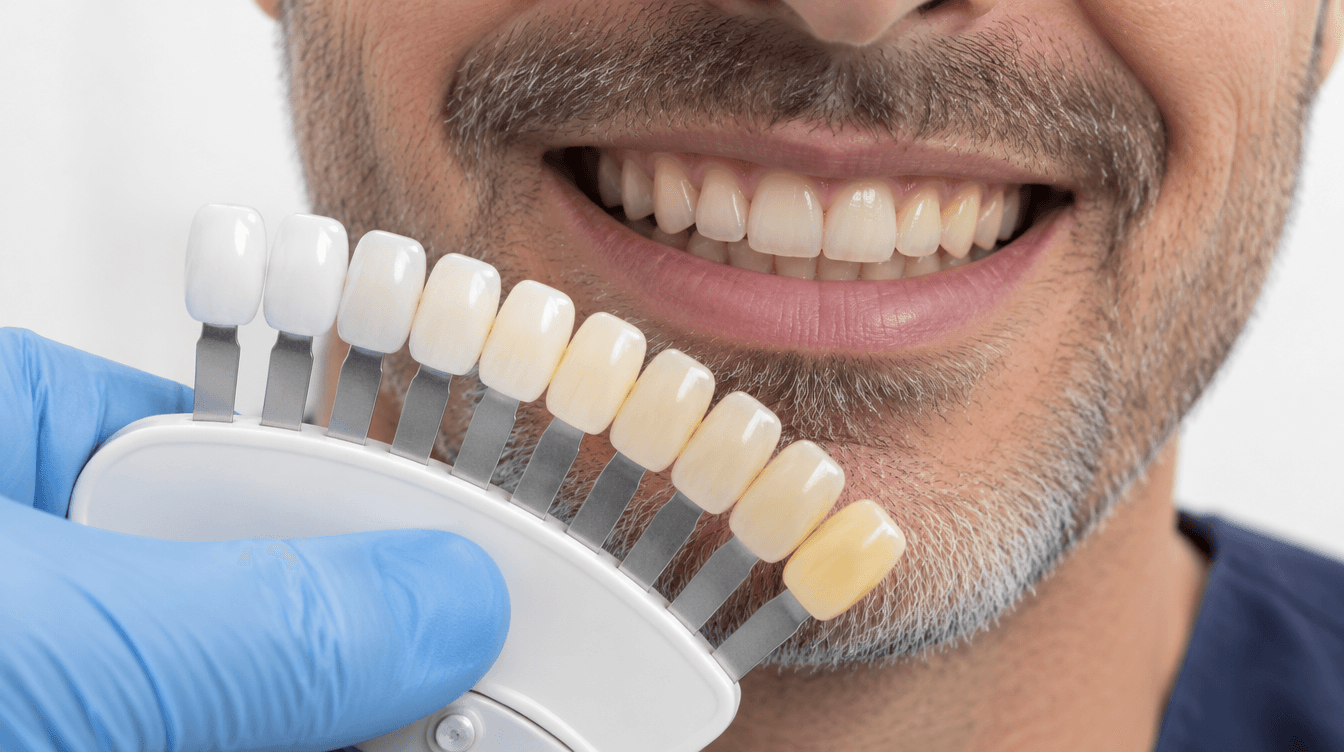
The ADA's MouthHealthy site puts it in terms you can check in the mirror: yellow teeth will probably bleach well, brown teeth may not respond as well, and teeth with gray tones may not bleach at all. Common causes include:
- Coffee, tea, red wine and tobacco, which build up on the surface.
- Age: enamel thins over the years and lets more of the yellowish dentin show through.
- Tetracycline or doxycycline taken in childhood, which can discolor teeth from the inside.
- High fluoride intake in childhood, which can leave white spots.
- An injury to a tooth, from a fall, a car crash or a sports hit.
Whitening: what it can and can't do
Whitening is bleaching. In the office, a dentist applies a concentrated hydrogen peroxide gel, with each application lasting up to 30 minutes, usually in one visit. The take-home version uses custom trays and a carbamide peroxide gel, typically 10% to 38%, and results build over a few days to a few weeks. Over-the-counter strips use a lower concentration than a dentist would.
The most common side effect is sensitivity. The ADA reports temporary sensitivity in up to two-thirds of people in the early stages of bleaching. With trays or strips it may start within 2 to 3 days of starting and usually settles by the fourth day after treatment. Some people also get mild gum irritation where the gel touches.
The big limit: only natural teeth whiten. Crowns, veneers and tooth-colored fillings will not change color, so whitening around them can leave a mismatch. If you're planning both, it usually makes sense to whiten first, let the shade settle, then match new porcelain to it. Results fade with coffee, tea and wine, so occasional touch-ups are normal.
Veneers: what they fix, and the trade-off
A veneer is a thin, custom shell bonded to the front of a tooth. It can cover chips, small gaps, teeth that are slightly crooked or misshapen, and stains that don't respond to whitening. For porcelain veneers, the dentist removes a small amount of enamel from the front and sides of the tooth so the shell sits flush.
That enamel doesn't grow back, and the ADA is plain about it: treatment is not reversible. Cleveland Clinic puts the average lifespan at 10 to 15 years with good care, and notes that veneers don't strengthen a tooth the way a crown does. A veneer can chip, crack, wear or loosen over time, and you can still get a cavity under or around it.
Veneers aren't for everyone. Any decay or gum disease has to be treated first, and the ADA says veneers may not be a good choice if you clench or grind your teeth or have a deep overbite. Most insurance plans don't cover them, since they're considered cosmetic.
Crowns: when the tooth needs strength, not just looks
A crown is a tooth-shaped cap that covers the whole visible part of the tooth. It's the right call when the problem goes deeper than appearance: a tooth with too much decay for a filling, a cracked or badly worn tooth, or a tooth that's had a root canal and needs protection. A crown restores the tooth's shape and bite as well as its color.
The trade-off is that the tooth has to be reshaped to fit under the cap, and because a crown fits over the entire tooth, the shaping goes all the way around. According to Cleveland Clinic, the average crown lasts 5 to 15 years, and with good care some last much longer. Temperature sensitivity is common in the first few weeks, and a crown can chip or crack over time.
For front teeth, all-ceramic crowns are usually the choice; Cleveland Clinic says they mimic natural enamel more than any other crown type. If a tooth is both discolored and structurally weak, a crown fixes both problems at once, where a veneer would only cover the front.
Whitening vs. veneers vs. crowns, side by side
Here's the short version, using the figures from the ADA and Cleveland Clinic:
- What it changes: whitening changes color only; veneers change the color and shape of the front surface; a crown changes the whole tooth, including its strength.
- Tooth removed: whitening, none; veneers, a small amount of enamel from the front and sides; a crown, enamel shaped on all sides.
- Can it be undone? Whitening fades. Most veneers and all crowns are permanent decisions.
- How long it lasts: whitening fades gradually and needs touch-ups; veneers average 10 to 15 years; crowns average 5 to 15 years.
- Best for: whitening for yellowing and surface stains; veneers for chips, gaps, shape and stubborn stains on healthy teeth; a crown for teeth that are decayed, cracked, worn or root-canal treated.
- Main side effects: whitening, temporary sensitivity; veneers and crowns, some sensitivity and the chance of chipping over the years.
When one dark tooth is a warning sign
If your whole smile has slowly yellowed, that's usually a cosmetic question. A single tooth that changes color is different. Cleveland Clinic notes that when just one tooth darkens, it's often because of decay or an injury to that tooth, and a tooth that turns gray may mean the nerve inside has died.
Don't assume a tooth that darkened after a fall or a sports hit will fade on its own. The color can mean the nerve inside is damaged or has died, and that needs an exam and an X-ray before anyone talks about looks. Sometimes the right first step is a root canal, with cosmetic options afterward.
Call us sooner rather than later if a dark tooth comes with pain, bad breath, bleeding gums, or a hole you can see or feel. Small issues are much easier to fix early.
How we plan it at Illumination
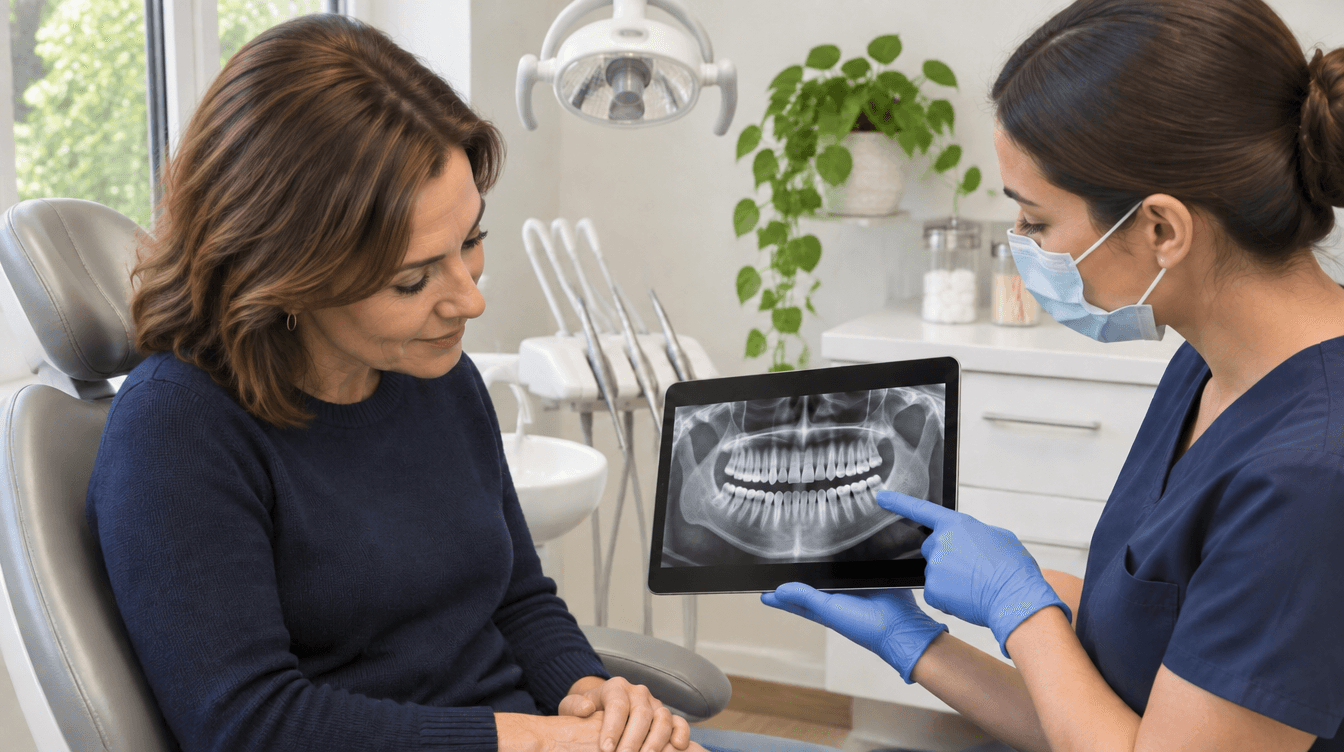
Every cosmetic plan at our Lutz office starts with a consultation, not a sales pitch. We look at your teeth, check for decay or gum problems that need care first, and talk through what you'd like to change. Then we match the treatment to the goal, and we'll tell you when the simplest option is the right one.
We offer professional whitening, porcelain veneers and crowns. For crowns, we use CEREC technology to design, mill and place a permanent ceramic crown in a single visit in many cases, with no temporary crown and no second appointment. Not every tooth qualifies, and we'll tell you during the exam. Dr. Noah Honig has training in cosmetic and implant dentistry and has been named a Tampa Magazine Top Dentist every year since 2017.
If cost is part of the decision, we work with most major PPO plans, offer in-house membership plans, and partner with Cherry and CareCredit for payment plans. Schedule a consultation at our Lutz, FL office and we'll walk you through realistic options before you commit to anything.

Frequently asked questions
Can whitening fix gray or brown teeth?
Often not fully. According to the ADA, yellow teeth usually bleach well, brown teeth may not respond as well, and gray-toned teeth may not bleach at all. Discoloration from medications or an injury generally won't respond to whitening, so we'd check the tooth first, then talk through options like veneers or a crown.
Will whitening change the color of my crowns, veneers or fillings?
No. Only natural teeth whiten, so existing dental work keeps its color. If you plan to whiten and get new veneers or crowns, whitening first lets the new work be matched to your brighter shade.
Are veneers permanent?
Most are. Porcelain veneers need a small amount of enamel removed, and that can't be reversed. They last 10 to 15 years on average, so plan on eventual replacement.
Is a crown or a veneer better for a front tooth?
It depends on how healthy the tooth is. A veneer suits a strong tooth that only needs its front surface improved; a crown is better when the tooth is decayed, cracked, worn or has had a root canal.
Does teeth whitening hurt?
It can cause temporary sensitivity, which the ADA says affects up to two-thirds of people early in treatment. It may start within 2 to 3 days of beginning and usually settles by the fourth day after treatment.
Can I get veneers if I grind my teeth?
Possibly not. The ADA says veneers may not be a good choice if you clench or grind your teeth or have a deep overbite, so we'd look at your bite before recommending them.


Ready to talk about your smile?
We'll take a look, walk you through what's going on, and lay out your options before anything happens.