Diabetes and Gum Disease: Why Each Makes the Other Worse
High blood sugar makes gum infection more likely and harder to heal, and gum infection makes blood sugar harder to control. Here's how that cycle works, what treating your gums can do for your A1C, and what to tell your dentist.
By Dr. Brandon J. Wolf, DMD · November 9, 2026 · 6 min read

A two-way street, not a one-way risk
Most people with diabetes have heard that it raises the risk of gum disease. Fewer have heard the other half: gum disease can make diabetes harder to manage. The National Institute of Dental and Craniofacial Research (NIDCR) puts it plainly, saying that having gum disease "may make your blood sugar harder to control." The European Federation of Periodontology calls the relationship bidirectional, meaning each condition feeds the other.
That matters for a lot of people. According to the CDC, an estimated 40.1 million Americans had diabetes in 2023, and 11.0 million of them didn't know it yet. The CDC also estimates that 115.2 million U.S. adults have prediabetes. If you're in either group, your gums deserve the same attention you give your eyes and feet.
How high blood sugar sets up gum infection
Diabetes changes your mouth in a few ways. The National Institute of Diabetes and Digestive and Kidney Diseases (NIDDK) explains that it can change your saliva, which normally washes away food and fights bacteria. When blood glucose runs high, glucose levels in saliva can rise too, feeding the bacteria that form plaque. Some people also get dry mouth, which leaves teeth and gums with less of that natural protection.
Healing is the other piece. NIDCR notes that diabetes can slow healing, which can interfere with treating gum disease, and the European Federation of Periodontology says diabetes raises the risk that gum disease will progress and become more severe. Control makes a real difference here. The ADA's MouthHealthy site says poor blood sugar control raises the risk of gum problems, especially as we age, so a well-managed A1C is protective for your mouth as well as the rest of you.
How gum infection pushes blood sugar up
Gum disease isn't just a problem sitting on the surface of your teeth. Once plaque gets below the gumline, it's a chronic infection in the tissue and bone that hold your teeth in place, and your body can stay in a low-grade fight with it for months or years.
Researchers have found that this shows up in blood sugar numbers. The European Federation of Periodontology reports that periodontitis is significantly associated with poorer glycemic control (higher A1C) and higher blood glucose, along with higher levels of insulin resistance. In its words, "controlling diabetes is more complicated when a patient also has periodontitis." The exact biology is still being studied, but the pattern is consistent enough that diabetes and dental organizations now treat gum care as part of diabetes care.
Signs to watch for
Gum disease is often quiet in its early stages, so these are worth checking for every time you brush. NIDDK calls gum disease "the most common and serious mouth problem related to diabetes." If you notice any of the signs below, don't wait for your next routine cleaning; NIDDK's advice is to see your dentist right away.
Most of these come from NIDDK's list of diabetes-related mouth problems:
- Gums that are red, swollen, or bleed when you brush or floss.
- Gums that are pulling away or receding from your teeth.
- Teeth that feel loose, or new spaces opening up between teeth.
- Bad breath that doesn't go away when you brush.
- A mouth that often feels dry, which can lead to sores, ulcers, and infections.
- Painful white patches in your mouth, a sign of a fungal infection called thrush.
- Cuts or sores in your mouth that seem slow to heal, since NIDCR notes diabetes can slow healing.
What gum treatment can do for your A1C
Here's the encouraging part. If gum disease can push blood sugar up, treating it should help, and the research backs that up. A 2022 Cochrane review, one of the most rigorous types of evidence summary in medicine, pooled 30 trials with 2,443 participants who had both diabetes and gum disease. People whose gum disease was treated with professional cleaning below the gumline had A1C levels about 0.43 percentage points lower at 3 to 4 months than people who got no treatment or usual care. At 6 months the difference was about 0.30 points, across 12 studies.
The reviewers rated this moderate-certainty evidence. To keep it in perspective, that's a modest change, and gum treatment is an addition to your diabetes plan, not a replacement for your medication or the rest of your plan. Still, it's a real, measurable benefit from something that also protects your teeth. If your A1C has been stubborn and your gums bleed, it's worth getting them checked.
What we do at Illumination
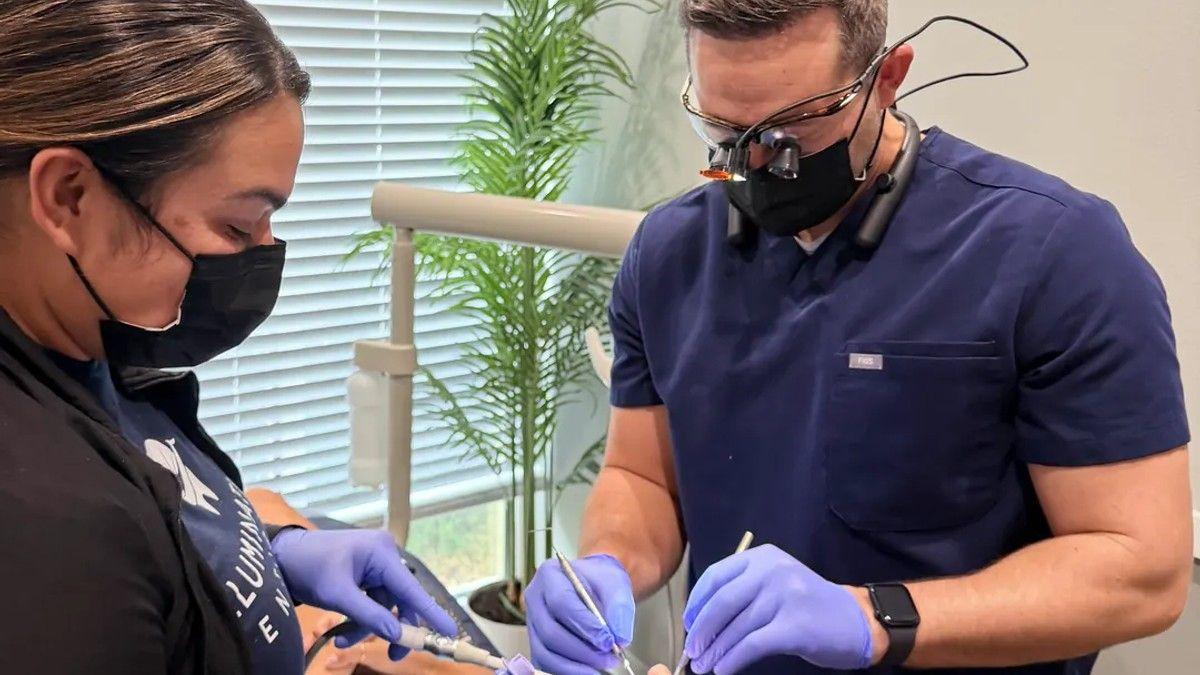
We check gum health at every routine cleaning, not just when something already hurts, because the earlier gum disease is caught, the simpler it is to treat. Early gingivitis is reversible with a good cleaning and better home care. Once pockets form below the gumline, we treat it with scaling and root planing, a deep cleaning that removes plaque and tartar above and below the gumline. For deeper pockets, we may place Arestin, a localized antibiotic, right where the infection is.
Gum disease is managed long-term rather than cured once. Patients treated for it typically move to maintenance cleanings every 3 to 4 months instead of every 6. Blood sugar control and not smoking both significantly improve how well treatment holds up, so we'll talk with you about both, without lectures. If you have diabetes and it's been a while since your last cleaning, schedule a visit at our Lutz, FL office and we'll take a careful look.
What to tell your dentist
We can only plan around what we know, so don't assume it's in your chart. Both NIDDK and the European Federation of Periodontology recommend keeping your dentist in the loop. Before your visit, it helps to have:
- That you have diabetes or prediabetes, and how long you've had it.
- Your most recent A1C or other diabetes control results.
- Your current medications, and any recent changes to them.
- Any diabetes-related problems, such as kidney, nerve, or heart issues.
- Whether you've had recent low blood sugar episodes, so we can plan around them.
- Before oral surgery or other extensive dental work, a word with your doctor about how often to check your blood glucose and whether the dose or timing of any medicine should change, as NIDDK advises.
A daily plan that protects both
None of this requires special products. These basics come from the ADA's MouthHealthy site and NIDDK:

- Brush twice a day for at least 2 minutes with a soft-bristled brush, paying attention to where your teeth meet your gums.
- Clean between your teeth once a day with floss or another interdental cleaner.
- Keep your blood sugar in the target range you and your doctor have set.
- If you smoke, stop. NIDDK notes smoking raises the risk of many diabetes and mouth problems, and 1-800-QUIT-NOW is a free place to start.
- Mention dry mouth at your next visit instead of putting up with it.
- Ask us how often you should come in for cleanings. With diabetes, the ADA says regular dental visits are a must.
Frequently asked questions
Can diabetes cause gum disease?
Diabetes doesn't cause gum disease on its own, since plaque bacteria do that, but it raises the risk and can make gum disease more severe and slower to heal. The risk is higher when blood sugar isn't well controlled.
Can gum disease raise your blood sugar?
It can. Gum disease is linked to higher A1C and more insulin resistance, and NIDCR says it may make blood sugar harder to control.
Will treating my gums lower my A1C?
It may help a little. A 2022 Cochrane review found A1C about 0.43 points lower 3 to 4 months after gum treatment, which is a useful addition to your diabetes care but not a substitute for it.
How often should I see the dentist if I have diabetes?
There's no single schedule for everyone, so ask your dentist what fits your gums. Many people with gum disease need cleanings every 3 to 4 months instead of every 6.
Why do my gums bleed more since my diabetes diagnosis?
Bleeding gums are a common early sign of gum disease, which is more likely with diabetes. Don't stop brushing; book a gum check so it can be treated while it's still easy to reverse.
Should I tell my dentist I have prediabetes?
Yes. Share it along with your latest A1C and medications, so your dental team can watch your gums more closely and plan treatment safely.
- 1. NIDCR: Diabetes & Oral Health
- 2. NIDDK: Diabetes, Gum Disease, & Other Dental Problems
- 3. CDC: National Diabetes Statistics
- 4. ADA MouthHealthy: Diabetes
- 5. European Federation of Periodontology: Perio & Diabetes FAQs
- 6. Cochrane (2022): Treatment of periodontitis for glycaemic control in people with diabetes



Ready to talk about your smile?
We'll take a look, walk you through what's going on, and lay out your options before anything happens.