5 Ways Your Oral Health Affects the Rest of Your Body
Gum disease is linked to heart disease, diabetes, pregnancy complications, spreading infections, and pneumonia. Here's what the research actually supports, what's still only a link, which tooth pain needs a call today, and the daily habits that protect your mouth and your health.
By Dr. Brandon J. Wolf, DMD · November 16, 2026 · 6 min read

Your Mouth Is Part of Your Body
It's easy to think of your teeth as their own department, separate from the rest of your health. But your gums are living tissue with a rich blood supply, and your mouth is the entry point for everything you eat and breathe. When something goes wrong there, it doesn't always stay there.
Gum disease is also far more common than most people assume. According to the CDC, 42% of U.S. adults aged 30 and older have periodontitis, and about 8% have a severe form, based on national survey data from 2009 to 2014. Early gum disease often doesn't hurt, so it's easy to miss.
It starts with plaque, a sticky film of bacteria. Whatever you don't brush and floss away hardens into tartar, which only a professional cleaning can remove. Researchers are still studying how gum disease connects to the rest of the body. One leading idea is inflammation: Harvard Health notes that gum disease adds to the body's overall burden of inflammation, a key contributor to many health problems, especially atherosclerosis, the hardening of the arteries. That's why you'll see the word "linked" a lot below, and we'll say clearly when the evidence goes further.
1. Your Heart
This is the best-known connection. Harvard Health reports that people with gum disease have 2 to 3 times the risk of a heart attack, stroke, or other serious cardiovascular event.
Here's the honest part. Gum disease and heart disease share risk factors, such as smoking and an unhealthy diet, and those may explain much of the overlap. Many people with heart disease have healthy gums, and not everyone with gum disease develops heart problems. So far, there's no proof that treating gum disease prevents heart disease or its complications.
What that means for you: healthy gums aren't a substitute for blood pressure checks, cholesterol tests, or your cardiologist's advice. But if you're already working on your heart health, caring for your gums fits right alongside it, and quitting tobacco helps both at once.

2. Your Blood Sugar
Diabetes and gum disease affect each other in both directions. According to the CDC, gum disease can be more severe and take longer to heal if you have diabetes. And if you have gum disease, your diabetes may be harder to manage.
The encouraging side is that the CDC also notes treating gum disease may help lower blood sugar over time. With about 1 in 8 Americans living with diabetes, that's a lot of people who stand to benefit from regular dental care. We cover this in depth in our post "Diabetes and Gum Disease: Why Each Makes the Other Worse." If you have diabetes, tell us at your visit, along with your most recent A1C if you know it.
3. Pregnancy
Hormone changes during pregnancy can make the gums more reactive to plaque. The CDC estimates that 60% to 75% of pregnant women have gingivitis, the early, reversible stage of gum disease. Puffy gums that bleed when you brush are the usual sign.
Periodontitis, the more advanced stage, has been associated with preterm birth and low birth weight, though the CDC notes the mechanism isn't fully understood. It's another case of "linked," not "proven cause," but it's a good reason to keep up with care while you're expecting.
Many expectant parents put off the dentist out of caution, and that isn't necessary. The CDC says dental care is safe and important during pregnancy. Let us know you're pregnant and how far along you are, and we'll plan your visit around it.
4. Infections That Spread
A dental abscess is a pocket of pus caused by a bacterial infection, usually from deep decay, a cracked tooth, or advanced gum disease. It can cause intense, throbbing pain, a bad taste, sensitivity to hot and cold, and swelling in the face, jaw, or neck glands, sometimes with a high temperature.
The UK's National Health Service (NHS) puts it plainly: "A dental abscess will not go away on its own." Treatment usually means draining the infection, then either a root canal to save the tooth or removing it, sometimes with antibiotics. The sooner it's treated, the simpler it tends to be, because small issues are much easier to fix early.
In some cases, an untreated abscess becomes a medical emergency. The warning signs are in the tooth pain checklist below.
5. Your Lungs
Your mouth sits at the top of your airway. In frail older adults, especially nursing home residents, bacteria from the mouth can be breathed into the lungs, and poor oral hygiene is associated with pneumonia in this group.
A Cochrane review, with evidence current to 2022, found that professional oral care may reduce pneumonia-related deaths among nursing home residents. The evidence is low certainty, and it hasn't been shown to reduce how often pneumonia happens. Still, if you help care for an aging parent, daily brushing and denture cleaning are simple and low-risk, and regular professional dental visits are worth keeping on the calendar.
Tooth Pain: When to Call Us and When to Go to the ER
Most tooth pain isn't an emergency, but it's always a message. Here's how to sort it out:
- Call us this week: pain that lingers after hot or cold, pain when you bite down, a chipped or cracked tooth, or gums that bleed every time you brush.
- Call us the same day: a throbbing toothache, a pimple-like bump on the gum, a bad taste that won't go away, swelling in your gum or cheek, or a fever along with tooth pain.
- Go to the ER or call 911: trouble breathing, speaking, or swallowing; a swollen or painful eye or sudden vision problems; a lot of swelling in your mouth; or trouble opening your mouth. Don't drive yourself.
- Don't wait it out if the pain fades. According to the NHS, a dental abscess will not go away on its own, so less pain doesn't mean the infection is gone.
A Daily Routine That Protects Your Mouth and Your Health
The habits that protect your gums are simple, and they're the same ones that protect everything else on this list. The American Dental Association (ADA) recommends:
- Brush twice a day with a soft-bristled brush and an ADA-accepted fluoride toothpaste.
- Hold the brush at a 45-degree angle to the gums and use gentle, short strokes about one tooth wide.
- Clean between your teeth once a day. Our post "Water Flosser vs. String Floss: Which Actually Cleans Better?" compares your options.
- Replace your toothbrush every 3 to 4 months, or sooner if the bristles fray.
- Skip tobacco. The CDC lists smoking, along with poor oral hygiene and diabetes, among the factors associated with serious gum disease.
- Keep your regular check-ups and cleanings, because tartar can't be brushed off at home.
What We Do at Illumination
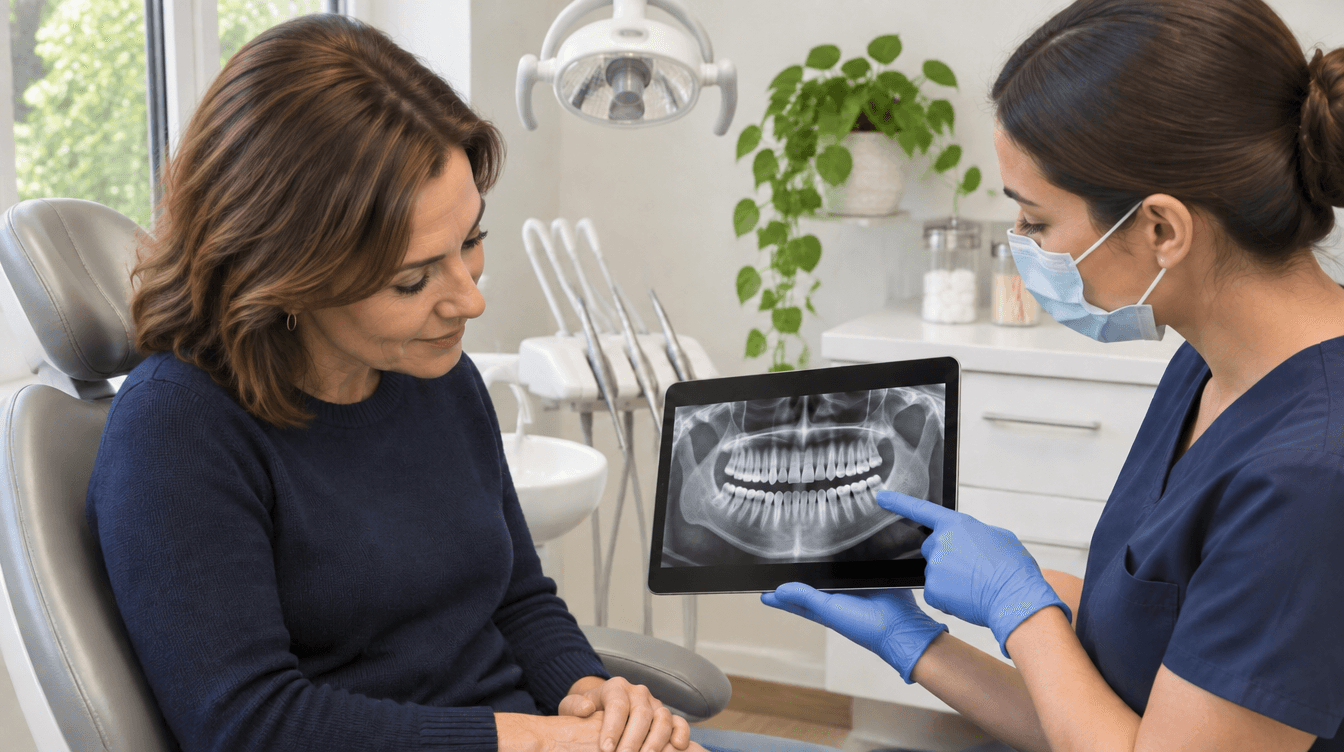
At our Lutz office, a check-up is more than a cavity hunt. We check your gums and include an oral cancer screening as part of your regular exam. If you have diabetes, a heart condition, or you're pregnant, tell us so we can plan around it. To check the bone around your teeth, we use panoramic X-rays, and for more complex cases, CBCT 3D imaging.
If your gums need more than a regular cleaning, our periodontal care includes scaling and root planing, a deep clean above and below the gumline, with Arestin, a localized antibiotic, for deeper pockets. No insurance? Our in-house membership plans and financing through Cherry and CareCredit help keep cost from getting in the way. Call (813) 906-5668 or book online to schedule a visit with Dr. Wolf or Dr. Honig.
Frequently asked questions
Can gum disease cause a heart attack?
People with gum disease have 2 to 3 times the risk of a serious cardiovascular event, according to Harvard Health, but shared risk factors like smoking may explain much of that. There's no proof that gum disease directly causes heart attacks or that treating it prevents them.
Is it safe to go to the dentist while pregnant?
Yes. The CDC says dental care is safe and important during pregnancy. Tell us you're pregnant and how far along you are so we can plan your care.
Will a tooth infection go away on its own?
No. A dental abscess won't heal without treatment, even if the pain fades. It needs to be drained and the source treated, usually with a root canal or by removing the tooth.
What are the signs a tooth infection is an emergency?
Go to the ER or call 911 if you have trouble breathing, speaking, or swallowing, swelling around your eye, a lot of swelling in your mouth, or trouble opening your mouth.
Does treating gum disease help with diabetes?
It may. The CDC notes that treating gum disease may help lower blood sugar over time, and that gum disease may make diabetes harder to manage.
How common is gum disease?
Very common. The CDC reports that 42% of U.S. adults aged 30 and older have periodontitis, and about 8% have a severe form.
- 1. CDC: Periodontal (Gum) Disease Facts
- 2. Harvard Health: Gum disease and heart disease, the common thread
- 3. CDC: Diabetes and Oral Health
- 4. CDC: Talking to Pregnant Women About Oral Health
- 5. NHS: Dental abscess
- 6. Cochrane: Oral care measures for preventing nursing home-acquired pneumonia
- 7. ADA MouthHealthy: Brushing Your Teeth


Ready to talk about your smile?
We'll take a look, walk you through what's going on, and lay out your options before anything happens.