Snoring, Sleep Apnea, and Why Your Dentist Asks About Your Sleep
Loud snoring and daytime exhaustion can point to obstructive sleep apnea. Here's what's happening in your airway at night, the signs worth taking seriously, and how a custom oral appliance from your dentist can help, especially if CPAP hasn't worked for you.
By Dr. Brandon J. Wolf, DMD · September 17, 2026 · 8 min read
Snoring isn't always harmless
Plenty of people snore without anything more serious behind it. But snoring can also be the most noticeable sign of obstructive sleep apnea, a common condition where breathing repeatedly stops and restarts during sleep.
Many people with sleep apnea don't know they have it. You're asleep when it happens, so the first person to notice is often a bed partner who hears the snoring stop, a pause, and then a gasp.
What's happening in your airway
In obstructive sleep apnea, the upper airway becomes blocked many times during sleep, reducing or stopping airflow. According to the NHLBI, the tongue may fall backward and block the airway, and relaxed mouth and throat muscles or extra tissue in the neck can narrow it. The drop in airflow triggers your brain to wake you just enough to start breathing again, often so briefly you don't remember it.
That cycle can repeat over and over through the night. It's why people with untreated sleep apnea can spend eight hours in bed and still wake up exhausted.
There's also a less common type, central sleep apnea, where the brain doesn't send the signals needed to breathe. That type isn't treated with an oral appliance, which is one reason a proper diagnosis comes first.
Signs worth taking seriously
None of these proves you have sleep apnea, but several together are worth bringing up with your physician or with us.
- Loud, frequent snoring
- A partner noticing pauses in your breathing
- Waking up gasping for air
- Waking with a dry mouth or a headache
- Feeling unrested even after a full night in bed
- Daytime sleepiness, trouble focusing, or slow reactions
- Waking often during the night to urinate
Why it matters for your health
Poor sleep night after night affects more than your energy. According to the NHLBI, it can affect concentration, decision-making, memory, and behavior, and daytime sleepiness can lead to problems with learning, focusing, and reacting.
Untreated sleep apnea is also linked to a higher risk of serious problems, including stroke and heart attack. That's why snoring that comes with these other signs is worth a real evaluation instead of a joke at breakfast. Obesity, large tonsils, and hormone changes are among the factors that can narrow the airway and raise the risk.
Diagnosis comes first
Sleep apnea is diagnosed with a sleep study. If a sleep specialist decides an oral appliance is a good option, you're referred to a dentist to be fitted, and according to Cleveland Clinic, oral appliances work best for mild to moderate obstructive sleep apnea.
If you suspect sleep apnea, start there. If you've already been diagnosed, bring your results to your consultation so we can review them together.
Where a dentist fits in: oral appliance therapy
CPAP, a machine that keeps the airway open with gentle air pressure through a mask, is the most effective treatment for improving airflow and is generally the first-line recommendation. The trouble is that many people find it hard to use consistently, and some stop.
For adults with obstructive sleep apnea who can't tolerate CPAP or would prefer another option, joint guidelines from the American Academy of Sleep Medicine and the American Academy of Dental Sleep Medicine support a custom oral appliance provided by a qualified dentist. Oral appliances work best for mild to moderate obstructive sleep apnea.
The most common type is a mandibular advancement device, or MAD. It looks a bit like a sports mouthguard and gently holds your lower jaw forward while you sleep, which pulls the tongue forward and helps keep the airway open. It's quiet and easy to take along when you travel. Some people use both: CPAP at home and an appliance for travel.
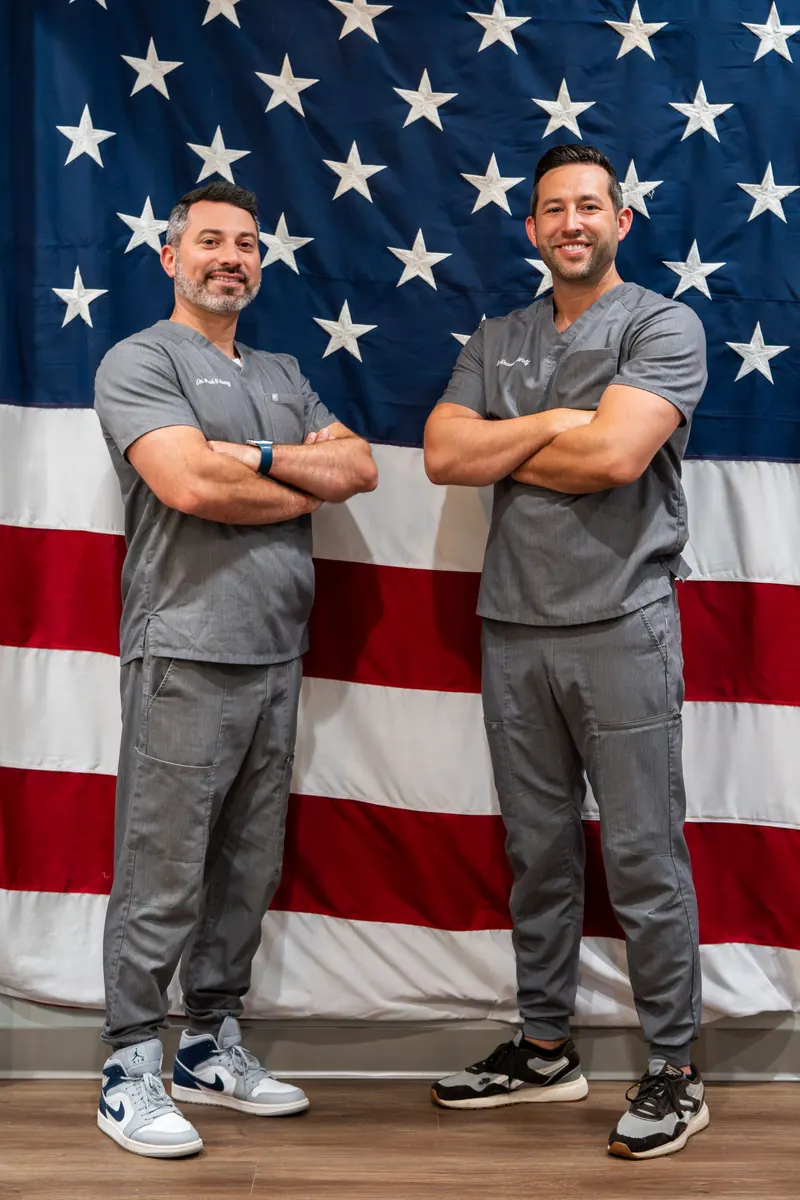
Dr. Wolf has advanced training in dental sleep medicine, is an active member of the American Academy of Dental Sleep Medicine, and built the practice's dental sleep program.
Custom-made vs. drugstore devices
Over-the-counter boil-and-bite mouthpieces are widely sold for snoring, but custom-made appliances give better results, and guidelines favor a custom, adjustable device. A custom appliance is built from an exact model of your teeth and bite, and it can be fine-tuned in small steps to find the position that works for you while staying comfortable.
What getting an appliance involves
- Consultation: we review your sleep study and history to confirm an oral appliance is appropriate.
- Scan or impressions: your device is made from an exact model of your teeth and bite.
- Fitting: once it arrives, we check the fit and comfort.
- Adjustment: over the following weeks we gradually adjust the jaw position for the best result.
- Follow-up testing: a follow-up sleep test shows how well the device is working.
- Ongoing checkups: bring your appliance to regular dental visits so we can check its condition and your bite.
Side effects to know about
In the first 1 to 2 weeks, some people notice extra saliva, a dry mouth, jaw or tooth soreness, or gum irritation. Starting with a few hours a night and building up helps, and most people adjust within 2 to 4 weeks.
Over the long term, some people see changes in their bite or tooth position. That's uncommon with a properly fitted appliance, and it's exactly what regular checkups are for.
Frequently asked questions
Do I need a sleep study first?
Yes. An oral appliance is a treatment for diagnosed obstructive sleep apnea, so we work alongside your physician and their sleep study results.
Is an oral appliance as effective as CPAP?
CPAP is more effective at improving airflow. For people with mild to moderate obstructive sleep apnea who can't tolerate CPAP, an oral appliance can be a good option, and some people's symptoms resolve fully.
Can an oral appliance help with snoring alone?
Often, yes. Guidelines support oral appliances for snoring, but a physician should evaluate snoring first to rule out sleep apnea.
How long does it take to get used to?
Most people adjust within 2 to 4 weeks. Starting with a few hours a night and building up helps.
Can I just buy a mouthpiece online?
Custom-made appliances give better results than over-the-counter boil-and-bite devices, and a dentist can adjust a custom device and monitor for side effects.
Who handles sleep apnea treatment at Illumination?
Dr. Wolf, who has advanced training in dental sleep medicine and built the practice's dental sleep program.
- 1. National Heart, Lung, and Blood Institute: Sleep Apnea
- 2. National Heart, Lung, and Blood Institute: Sleep Apnea Symptoms
- 3. National Heart, Lung, and Blood Institute: Sleep Apnea Causes and Risk Factors
- 4. Cleveland Clinic: Oral Appliance Therapy for Sleep Apnea
- 5. American Academy of Sleep Medicine: Oral appliance therapy clinical guideline (AASM and AADSM, 2015)
Ready to talk about your smile?
We'll take a look, walk you through what's going on, and lay out your options before anything happens.